CRM With Automation: Why Growing Businesses Are Replacing Manual Work in 2026
Still Managing Leads Manually? That’s Probably What’s Slowing Growth
Most businesses don’t have a lead problem. They have a system problem.
Leads come in from the website, ads, referrals, calls, WhatsApp, and social media—but then things start breaking. Someone forgets to reply. A follow-up gets delayed. Notes are scattered. Sales opportunities disappear quietly.
That is exactly where a CRM with automation becomes valuable.
It helps businesses organize customer data, automate repetitive tasks, respond faster, and create a smoother sales process from first inquiry to final sale. Instead of depending on memory and manual effort, growth starts running through systems.
For startups, agencies, service businesses, sales teams, and scaling companies, this is no longer a luxury tool. It is becoming a competitive advantage.

What Is CRM With Automation?
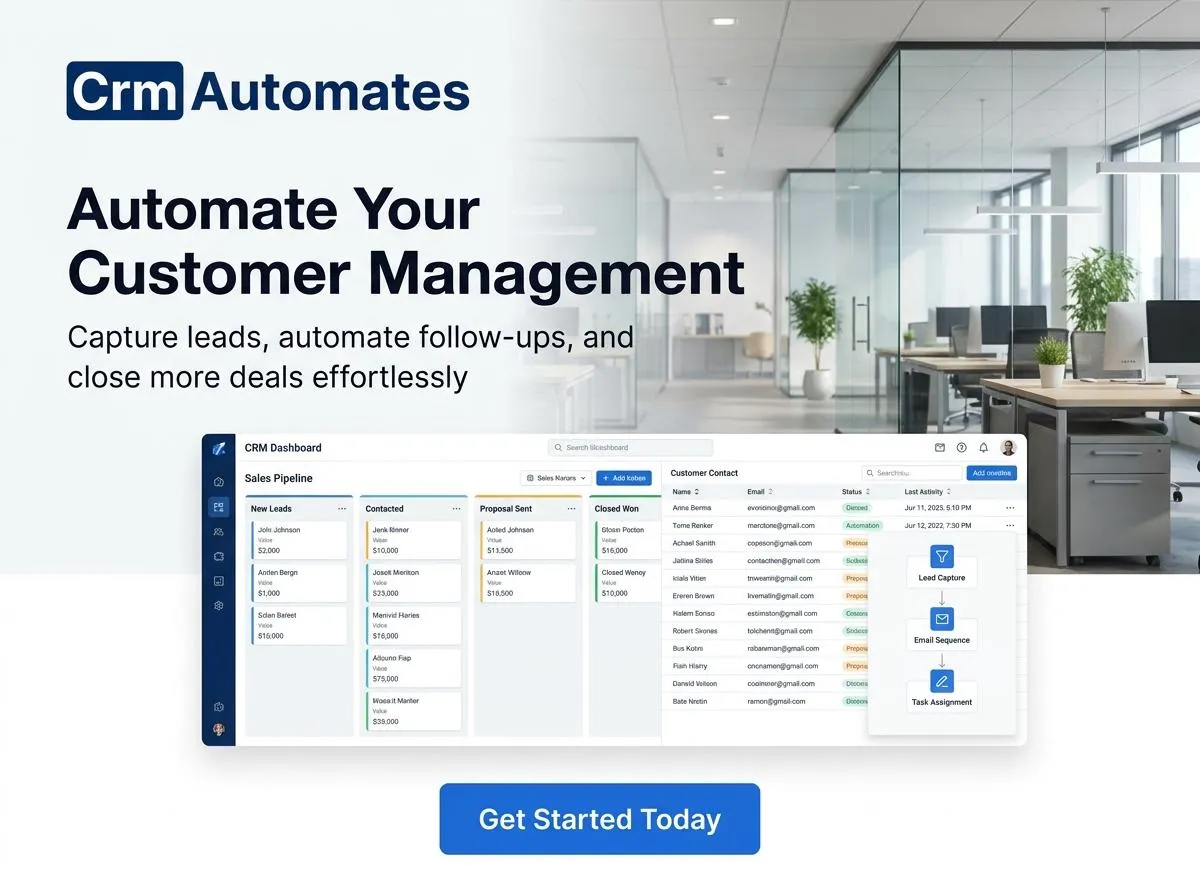
A CRM with automation is customer relationship software that stores contacts, tracks interactions, and automatically performs tasks based on triggers or workflows.
Think of it as combining two essential functions:
A CRM gives you one place to manage leads, customers, deals, notes, conversations, and team activity.
Automation removes repetitive work like follow-ups, reminders, assignments, and nurturing sequences.
Together, they create a business engine that saves time while increasing consistency.
For example, when someone fills out a contact form, your CRM can instantly log the lead, send a welcome message, notify a sales rep, assign a task, and schedule the next follow-up—without anyone touching a keyboard.
That is the real power of automation.
Why Businesses Search for CRM With Automation
When people search this keyword, they usually want a practical solution to one of these problems:
They are missing leads.
Their follow-up process is weak.
Sales reps are disorganized.
Too much admin work is eating time.
There is no visibility into the pipeline.
Growth feels messy and unpredictable.
A CRM with automation solves these pain points by replacing chaos with structure.
Instead of wondering what happened to a prospect from last week, everything is visible in one place.
How CRM With Automation Increases Sales
The biggest revenue leaks in most businesses are slow responses and inconsistent follow-up.
Customers compare businesses quickly. If one company replies instantly while another replies tomorrow, the faster one often wins.
That’s why automation matters.
With the right CRM, leads can receive immediate responses through email, SMS, or WhatsApp. They can be nurtured over time with helpful messages, reminders, and offers. Sales reps can be alerted at the right moment to step in and close the deal.
This creates momentum.
Businesses often discover they already had enough leads—they just didn’t have a system strong enough to convert them.
CRM With Automation Creates Better Customer Experience
Modern customers expect convenience.
They want fast replies, clear communication, reminders, updates, and a smooth journey. Businesses that feel slow or disorganized lose trust quickly.
CRM automation helps you create a professional experience without needing a huge team.
Appointments can be confirmed automatically. Missed calls can trigger text replies. Existing customers can receive renewal reminders. Review requests can be sent after a successful service.
The customer feels remembered. The business feels organized.
That combination builds loyalty.
What Features Actually Matter in a CRM With Automation
Many software platforms advertise hundreds of features. Most businesses only need the features that directly impact growth.
Lead capture from forms, ads, and landing pages is essential because every inquiry should enter the system instantly.
Pipeline tracking matters because it shows exactly where deals stand.
Workflow automation matters because it removes repetitive tasks like reminders, follow-ups, and stage updates.
Communication tools matter because email, SMS, calling, and WhatsApp need to connect smoothly.
Reporting matters because if you cannot measure lead sources, conversion rates, and team performance, improvement becomes guesswork.
The best CRM is rarely the one with the most features. It is the one your team actually uses every day.
Which Businesses Need CRM With Automation Most?
Service businesses benefit heavily because speed wins local customers. If you run HVAC, plumbing, roofing, legal services, clinics, or consulting, every inquiry matters.
Real estate teams use CRM systems to manage long sales cycles, property inquiries, and nurture leads that may convert months later.
Agencies use automation to manage prospects, proposals, onboarding, client communication, and upsells.
eCommerce brands use CRM automation for abandoned carts, repeat purchases, customer retention, and segmented marketing.
B2B sales teams use CRM platforms to manage multiple decision-makers, meetings, quotes, and deal stages.
If your business depends on leads or repeat customers, CRM automation is relevant.

Competitor Analysis: What Popular CRM Platforms Do Well
When users search for CRM with automation, they often compare established names.
HubSpot CRM is known for a user-friendly interface and strong marketing tools. It works well for inbound lead generation but can become expensive as usage grows.
Salesforce is powerful and highly customizable. It is strong for enterprise businesses, though smaller teams may find it complex.
Zoho CRM offers broad functionality at competitive pricing. It suits growing businesses that want value.
Pipedrive is popular for sales pipeline management. It is excellent for teams focused on deal flow and simplicity.
GoHighLevel is common among agencies because it combines funnels, automation, CRM, and white-label options.
But here is the truth many buyers discover later:
They did not need the “biggest” CRM.
They needed the one their team would consistently use.
That insight saves time and money.
Mistakes Businesses Make When Choosing CRM Software
One of the most common mistakes is buying based on hype instead of workflow.
A flashy platform with endless features means nothing if staff avoid logging in.
Another mistake is automating bad processes. If your sales journey is unclear, automation simply scales confusion.
Some businesses also skip onboarding. Even simple tools need proper setup, lead stages, templates, and ownership rules.
The best results happen when software matches the actual way your business sells.
How to Choose the Best CRM With Automation
Start with your real bottlenecks.
If leads are missed, prioritize lead capture and instant response.
If follow-up is weak, focus on workflow automation and reminders.
If the team lacks visibility, prioritize dashboards and pipeline tracking.
If customer retention is poor, choose a CRM with email and lifecycle campaigns.
Also ask practical questions:
Will the team use it daily?
Can it integrate with Gmail, Outlook, WhatsApp, Stripe, or Shopify?
Is support responsive?
Can it grow with the business next year?
Good software should reduce friction, not create it.

What Results Can You Expect?
Businesses that implement CRM automation properly often notice improvements in three areas first.
Response time becomes faster.
Team organization becomes stronger.
Lead conversion improves because follow-up becomes consistent.
Over time, reporting improves decisions, customer retention increases, and scaling becomes easier because growth is built on systems instead of constant firefighting.
FAQs About CRM With Automation
Is CRM with automation good for small businesses?
Yes. Small teams often gain the most because automation removes admin work and helps them compete with larger companies.
Can CRM with automation help close more deals?
Absolutely. Faster responses and consistent follow-up usually improve close rates.
Is CRM difficult to set up?
Basic systems can be implemented quickly. Advanced workflows may take more planning.
Does CRM replace salespeople?
No. It supports salespeople by removing repetitive tasks so they can focus on conversations and closing.
Can CRM work with WhatsApp and email?
Many modern CRM systems integrate with both, along with SMS and calendars.
Final Verdict
A CRM with automation is not just software. It is an operating system for growth.
It helps businesses stop losing leads, stop relying on memory, and stop wasting time on manual tasks that technology can handle better.
If growth feels harder than it should, the issue may not be your marketing or your sales team.
It may be the lack of a proper system.
Build the right system, and growth becomes simpler, faster, and more predictable.