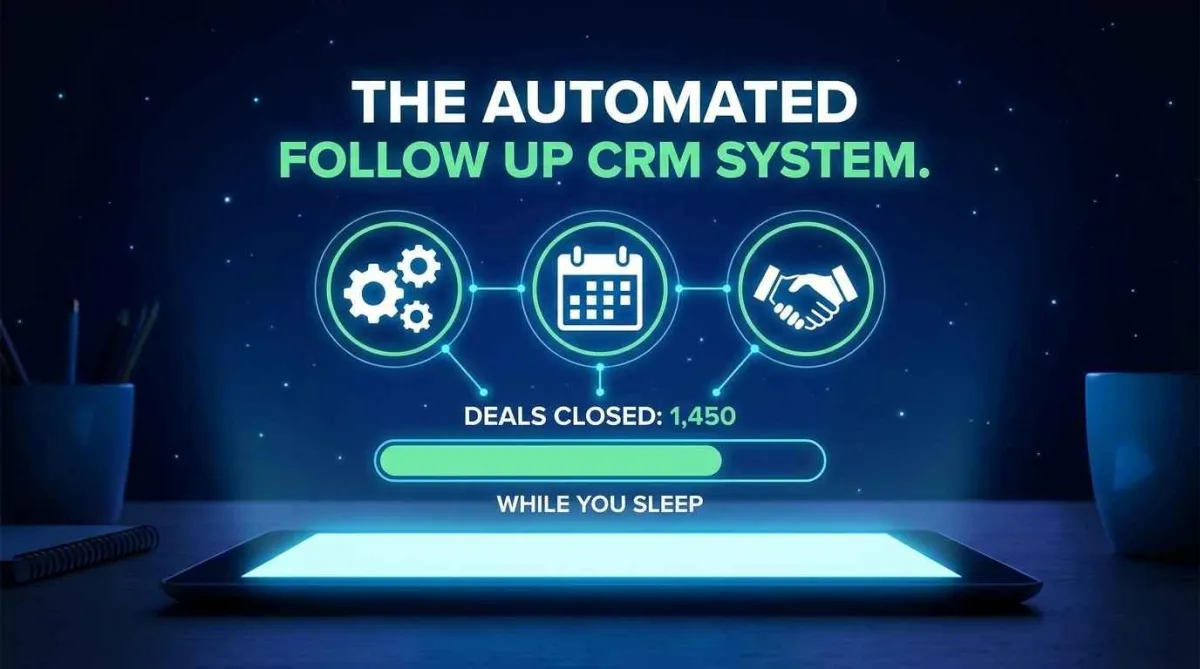
The Automated Follow Up CRM System That Closes Deals While You Sleep
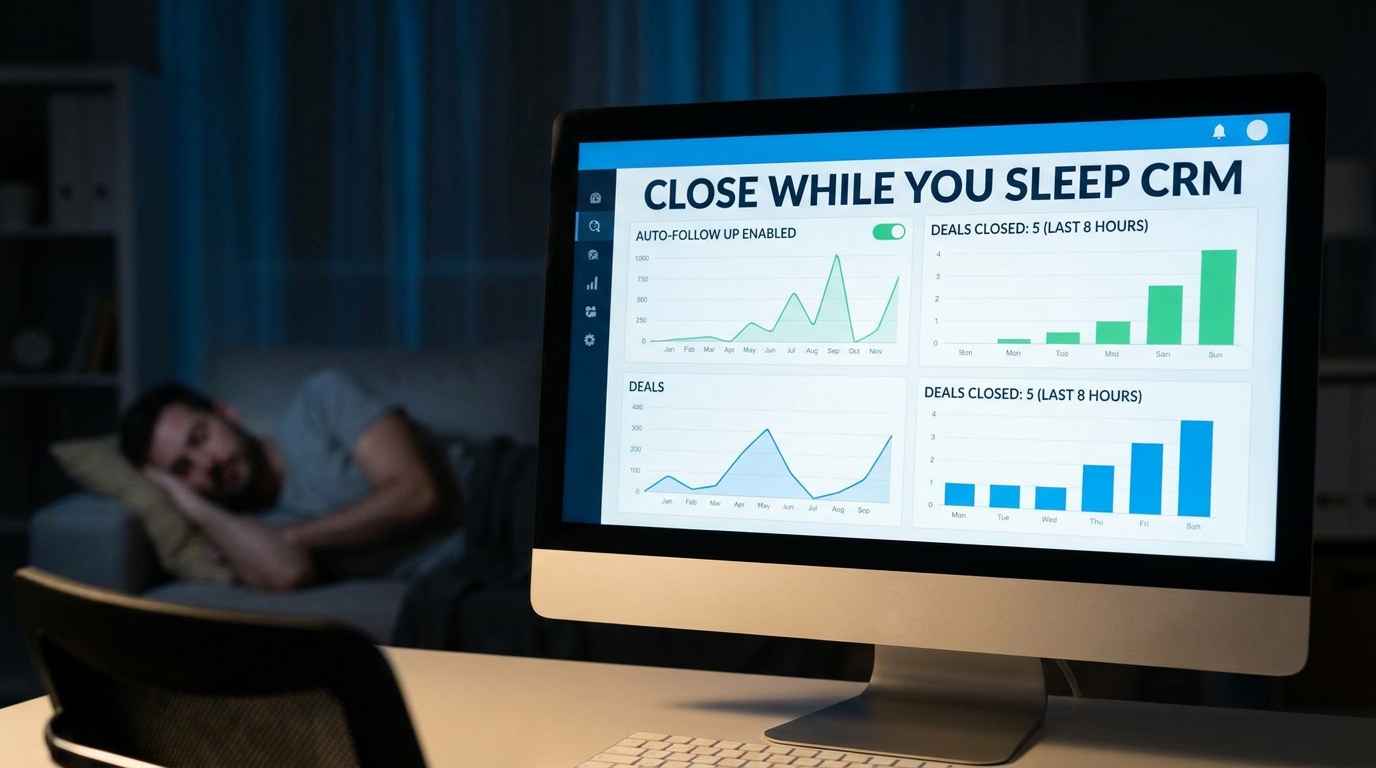
Your CRM Is Full of Leads That Will Never Hear From You Again
You have leads sitting in your CRM right now that went cold not because they lost interest but because nobody followed up at the right time. Your follow-up system either stopped after three emails, fired on the wrong trigger, or was built once by a freelancer who is long gone. That is where the revenue is leaking.
An automated follow up CRM system, when built by someone who actually knows what they are doing, plugs that leak permanently. It reaches the right lead at the right moment across the right channel without anyone on your team having to remember to do anything. This guide shows you exactly what that looks like, where most businesses get it wrong, and what operators scaling to six figures and beyond in the US and Canada are doing differently in 2026.
What an Automated Follow Up CRM System Actually Does
An automated follow up CRM system is a set of behavior-triggered workflows inside your CRM that contact leads and clients based on what they actually do, not just when a countdown timer runs out.
That difference sounds small. It is not.
Time-based follow-up sends a message three days after signup whether the lead has been back to your pricing page five times or has not opened a single email. Behavior-based follow-up watches what contacts do and responds accordingly. It escalates when someone is engaged. It changes the angle when they are not. It stops sending what is not working and starts sending what is relevant.
According to the 2025 Salesforce State of Sales report, sales reps using AI-assisted CRM automation convert leads at 26% higher rates than those relying on manual follow-up or basic time-delay sequences. The businesses winning in competitive North American markets are not outspending competitors on ads. They are out-following them.
A properly built system does five things most setups skip entirely. It responds to new leads within minutes. It follows up across email, SMS, and voicemail, not just email. It changes messaging based on what leads actually do. It moves contacts through the pipeline without anyone touching it manually. And it goes back and re-engages people who went quiet weeks or months ago.
Most businesses have the first one sometimes. The revenue lives in the other four.
Why Most CRM Automations Break Before They Close a Single Deal
No software vendor will say this so here it is straight. The automation is not the problem. The person who built it is.
Looking at GoHighLevel setups across agencies and SaaS businesses throughout North America, the failure points are almost always the same. Sequences that were built for an old offer and never touched again. Pipeline stages with labels but zero logic or triggers behind them. Follow-up that dies after three touchpoints because whoever set it up ran out of ideas, not because three is the right number for your sales cycle.
Gartner's 2025 CRM Market Guide found that 68% of organizations say their CRM automation underperforms. The primary reason cited is not the platform. It is the implementation.
The platforms are more than capable. GoHighLevel, HubSpot, Salesforce, all of them can execute sophisticated multi-channel follow-up without breaking a sweat. What breaks is the logic underneath. Tags that became inconsistent after a team change. SMS compliance that was never set up properly so text messages quietly stopped delivering three months ago. Triggers that made sense in month one and have never been reviewed since.
These failures do not announce themselves. They show up as a close rate that is always a little lower than it should be.
The Three Follow-Up Gaps Draining the Most Revenue
Speed to lead is the first one and it hurts the most quietly. A 2024 Harvard Business Review analysis found that responding to a lead within five minutes makes you 21 times more likely to qualify them compared to responding after 30 minutes. Most businesses respond in hours. Some respond the next day. A few never respond at all because the notification fired to an inbox no one monitors. An automated immediate response sequence removes this problem entirely but only if someone actually builds and maintains it.
Sequence abandonment is the second one. The average B2B sales cycle needs 7 to 13 touchpoints before a buying decision gets made, according to the Demand Gen Report 2024. The average automated sequence in a small business CRM runs three to five touches and stops. The business assumes disinterest. The competitor who shows up on touchpoint nine closes the deal.
Dead lead reactivation is the third one and it might be the most underestimated. Every CRM with more than six months of history has a graveyard of contacts who expressed real interest and were never heard from again. These are warm leads who already know you exist. A properly built reactivation campaign targeting 90-day dormant contacts almost always beats cold ad spend per conversion because you have already paid to acquire these people once.
The Exact Architecture of a Follow Up System That Actually Produces Revenue
Here is what a properly engineered automated follow up CRM system looks like layer by layer so you can hold it against what you currently have running.
The first layer is instant capture and response. A lead fills out a form, books a call, or sends an inquiry. Within 90 seconds they receive an automated SMS confirmation, an email with clear next steps, and an internal notification goes to the right person on your team. No human has to initiate any of it.
The second layer is pre-call nurture. Before a booked call happens, the lead gets two or three touchpoints: a confirmation, a piece of content that answers the question they are probably sitting with, and a reminder 24 hours before. In observed patterns across high-ticket service businesses, pre-call nurture sequences reduce no-shows by 30 to 40 percent. That alone justifies building it.
The third layer is post-call pipeline movement. After a sales conversation the CRM routes the lead automatically based on the outcome. A lost deal does not go dark. It enters a long-term nurture track that resurfaces the conversation at 30, 60, and 90 days. Some of those contacts become clients six months later. Without this layer they are simply gone forever.
The fourth layer is client onboarding. Once a deal closes an automated onboarding sequence fires immediately. Welcome message, intake form, access details, milestone check-ins at key intervals. The client feels taken care of from minute one without anyone on your team manually orchestrating it. Churn in the first 30 days is almost always a communication failure. This layer prevents it.
The fifth layer is retention and upsell triggers. At the 30-day mark, approaching renewal, or when engagement drops, automated messages check in, offer support, or present a relevant next step. Businesses that build this layer see real improvement in client lifetime value without hiring anyone new.
The sixth layer is referral and review requests. Most businesses leave this to chance and hope a happy client mentions them to someone. An automated request sent two to four weeks after a successful outcome captures referrals and reviews that would otherwise never happen.
The seventh layer is dormant lead reactivation. Every 90 days contacts who have not engaged receive a fresh campaign with a different angle and sometimes a different channel. A real percentage convert at zero additional ad spend from leads the business already paid to acquire.
That is the full architecture. The question is how much of it you have running right now and how clean the logic actually is.
How CRM Automates Builds This Infrastructure and Why 300 Plus Businesses Trust Them
CRM Automates at crmautomates.com is a certified GoHighLevel systems partner serving agencies, SaaS founders, and high-ticket service businesses across the US and Canada. Their founder Muhammad B. puts it plainly on their website. Most GHL problems are really people problems. That is more accurate than anything a software vendor will tell you.
They do not sell a platform. They engineer and manage the infrastructure running inside it. The pipelines, the triggers, the tag architecture, the AI-powered conversation workflows using tools like N8N and CloseBot, the SMS compliance setup that keeps text messages actually delivering, and the ongoing monitoring that catches broken automations before they quietly drain leads.
Their clients reclaim an average of 160 hours per month. That is time previously spent debugging broken sequences, manually sending follow-ups that should have fired automatically, and redoing onboarding steps that failed without anyone noticing. Their automations run at 99.3% uptime. That number matters more than it sounds because a broken trigger fails silently. You do not see leads falling through in real time. You see it months later in numbers that never reached where they should be.
Three Real Client Scenarios That Show Exactly What Changes
The first is an agency owner managing 22 clients inside GoHighLevel. Three different freelancers had touched the setup over 18 months. Sequences overlapped. Tags were inconsistent. Pipeline stages had names but no automation logic behind them. After a full audit and rebuild by CRM Automates the infrastructure ran cleanly across all accounts. The owner stopped spending hours every week firefighting broken logic and the team stopped getting messages from clients asking why no one had followed up.
The second is a SaaS founder sitting on 18 months of dormant leads. People who had expressed genuine interest, been contacted once or twice, and gone completely quiet. No reactivation system existed anywhere in the setup. CRM Automates built a dormant lead campaign that re-engaged that database over six weeks across email and SMS. A real percentage of those contacts converted without a single dollar of new ad spend. Revenue from leads the business had already paid to acquire and then abandoned.
The third is a professional services firm in Canada losing deals in the silence after discovery calls. Follow-up was entirely manual, sent when someone remembered, depending on rep availability and workload. CRM Automates built a post-call automation sequence with an immediate recap email, a value touchpoint at 48 hours, a soft close at day five, and objection-handling content at day nine. The sequence fired consistently regardless of what any individual rep was doing that week. The pipeline started closing at a higher rate not because the offer changed but because the follow-up became systematic for the first time.
The pattern across all three is the same. The leads were there. The platform was there. The expert engineering to make it actually work was the missing piece.
To see what is broken in your own setup CRM Automates offers a free 30-minute strategy call at crmautomates.com/book-now. No obligation. You leave with a specific picture of what is costing you and what to do about it.
Which CRM Platform Should You Actually Build Your Follow Up System On
GoHighLevel is the right choice for agencies, SaaS companies, and high-ticket service businesses in the US and Canadian market in 2026. It combines CRM pipeline management, email and SMS automation, voicemail drops, funnel building, phone systems, and appointment scheduling in one platform. G2's Winter 2025 CRM report ranked GoHighLevel in the top tier for small business ease of use. Its built-in SMS infrastructure and depth of behavioral trigger logic give it a structural advantage for businesses that need genuine multi-channel follow-up rather than just email sequences.
HubSpot is the better choice for mid-market B2B companies with content-driven sales cycles and larger budgets. Its CRM is cleaner and easier to manage without expert setup but automation depth requires paid tiers that scale up in cost quickly.
Salesforce is the enterprise standard and it can do everything. The implementation cost and operational complexity make it the wrong choice for most businesses under five million in annual revenue.
ActiveCampaign works well where email is the primary follow-up channel and deal values are lower. It is simpler and easier to manage without help but lacks the pipeline depth and voice channel integration that high-ticket businesses depend on.
The honest recommendation: if you run a service business, agency, or SaaS company in North America with a sales cycle longer than a week and a deal value above five hundred dollars, GoHighLevel with expert implementation is the right infrastructure. Without a certified expert building and maintaining it you are paying for capability you will never actually use.
Always verify current pricing directly on each platform's official website before making any decisions.
Audit Your Current Follow Up System Before Spending Another Dollar
Before buying new software or hiring anyone run this honest check on what you already have.
Does your system respond to a new lead within five minutes automatically? If you are not sure it probably does not.
Are you following up across email and SMS or just email? Single-channel sequences produce measurably lower engagement.
How many touchpoints does your follow-up run before stopping? If the answer is fewer than seven you are ending the conversation before most people are ready to decide.
Does your system respond to what leads actually do or does it just run on time delays regardless of engagement?
Do your pipeline stages have real automation logic behind them or are they just labels someone drags contacts through manually?
When did your 90-day dormant contacts last receive any outreach at all?
Is your client onboarding automated or is it still manual emails and calendar invites?
Are your CRM tags consistent and meaningful or have they become an unstructured mess nobody fully understands?
If more than three of those questions get honest answers of no, manual, or I do not know, your follow-up setup is not a system. It is a collection of good intentions.
Every single one of those gaps is fixable and most can be addressed inside a properly engineered GoHighLevel build without replacing your existing tech stack.
What Your Business Looks Like Once the Backend Actually Works
Businesses that build proper automated follow-up systems do not just close more deals. They operate differently at a fundamental level.
The founder stops being the bottleneck in the sales process. The team stops getting pulled into manual tasks that should have been automated months ago. New leads get a response in minutes instead of hours. Clients feel supported from day one without anyone manually orchestrating it. Dormant leads from six months ago start converting again without new ad spend.
None of that requires more headcount. None of it requires a bigger marketing budget. It requires the infrastructure to be built properly and maintained by someone who actually knows what they are doing.
That is the real business case for an automated follow up CRM system. Not the features. Not the platform name. Not the monthly software subscription. The leads are already in your CRM. The system either reaches them or it does not.
CRM Automates has built this infrastructure for over 300 businesses in North America. Their dedicated expert engagements start at 600 dollars per month. Their complete infrastructure build is 1,997 dollars as a one-time investment. Verify current pricing at crmautomates.com.
The leads are there. The question is whether your system is actually reaching them.
Frequently Asked Questions
What is an automated follow up CRM system? It is a set of behavior-triggered workflows inside your CRM that contact leads and clients automatically based on what they do, without anyone on your team having to manually initiate it.
Why is my CRM automation not converting leads? Almost always it is a bad implementation. Gartner's 2025 CRM Market Guide found 68% of businesses say their CRM automation underperforms and cited implementation quality, not the platform, as the primary reason.
What is the best CRM for automated follow-up in 2026? For agencies and high-ticket service businesses in North America, GoHighLevel leads on multi-channel automation depth. HubSpot is better for B2B content-led sales with larger budgets. The platform matters far less than the quality of the build.
How many follow-up touchpoints should my sequence have? The Demand Gen Report 2024 found most sales cycles need 7 to 13 touchpoints before a decision gets made. Most small business sequences stop at three to five. That is the gap where deals are lost.
What does CRM Automates do? They are a certified GoHighLevel systems partner. They build and manage full CRM infrastructure including follow-up systems, onboarding flows, AI workflows, and pipeline architecture for agencies, SaaS companies, and high-ticket service businesses across the US and Canada.
How much does a proper follow-up system cost to build? A complete GoHighLevel infrastructure build through CRM Automates is 1,997 dollars as a one-time project. Ongoing managed expert support starts at 600 dollars per month. Verify current pricing at crmautomates.com.
Can automation replace my sales team? No. Automation handles everything that does not require human judgment. Your team handles objections, relationships, and complex decisions. The best systems free your people to focus only on conversations that actually need them.
How do I reactivate old leads sitting in my CRM? Segment contacts who have not engaged in 90 or more days and send a campaign with a fresh angle across email and SMS. They already know your business. Reactivation consistently produces lower cost per conversion than cold acquisition.